

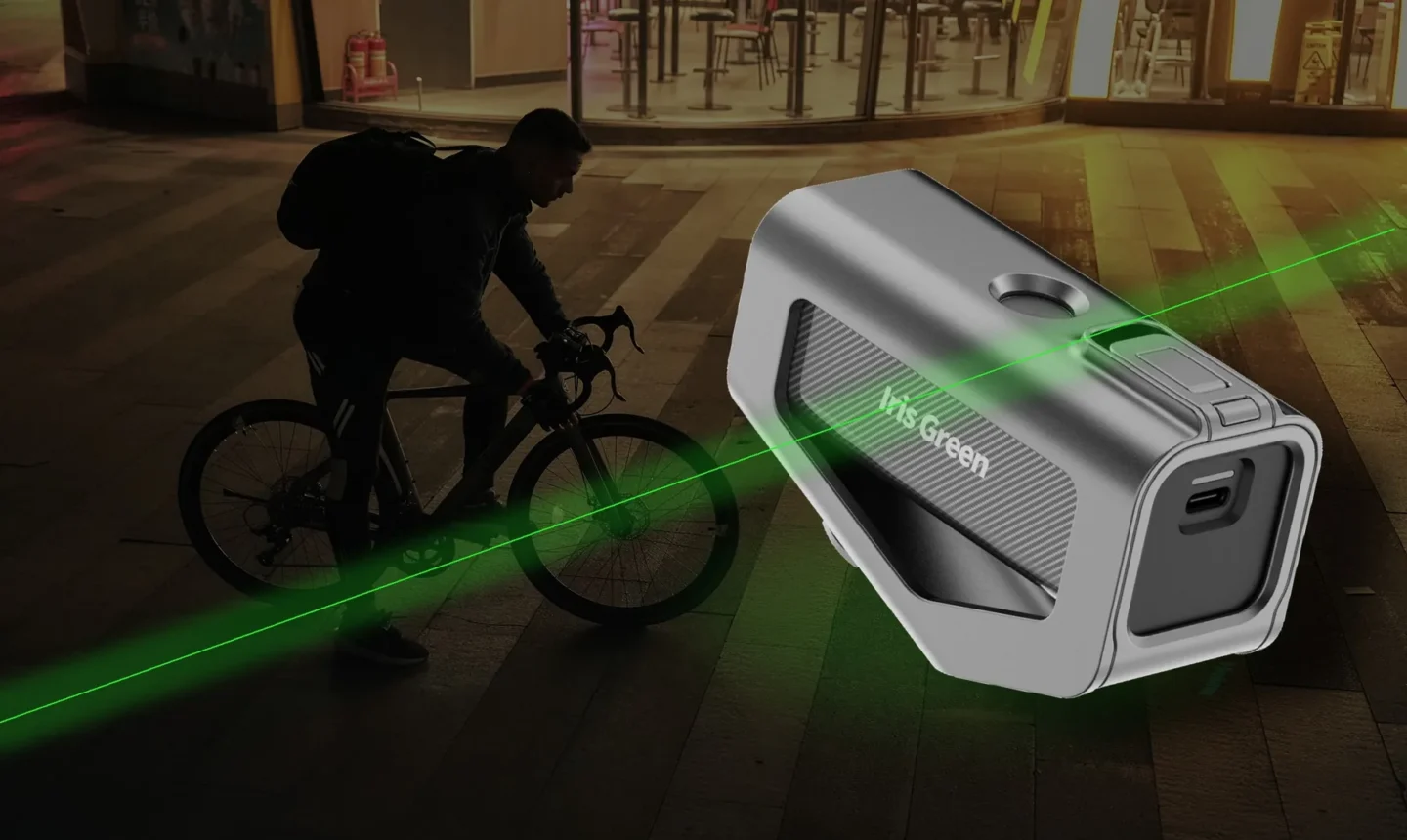
A crowdfunding campaign can prove that people believe in an idea. Production must prove that the idea can become a consistent, testable, and supportable product.
The transition from Kickstarter to production
The IRIS Green Kickstarter campaign ended successfully with 937 backers supporting a new type of cycling interface: a bike-mounted system that projects selected navigation cues, ride information, and visual content onto the road.
That support marked an important milestone, but it was not the end of the journey. For a hardware product, the period after crowdfunding is when the nature of the work changes. The focus moves from demonstrating what one carefully prepared device can do to defining how the product will be assembled, inspected, packaged, supported, and delivered repeatedly.
Simple distinction: a prototype proves that a product can work. Production proves that it can be built repeatedly and accepted to the same standard.
What Kickstarter validated
IRIS Green entered Kickstarter as an unfamiliar product category. It was not simply another bike light, phone mount, or cycling computer. It introduced a different way of presenting digital information during a ride: projecting selected visual content into the road environment.
Riders understood the idea
Backers saw how road projection could fit alongside existing cycling equipment and why it may matter for night riding.
The product reached beyond one use case
Questions covered projection visibility, navigation, ride data, mounting, app functions, customization, compatibility, regulations, delivery, and support.
Early support created responsibility
Backers commit before a normal retail experience exists, so communication and quality control matter even more.
The campaign validated interest. The next responsibility is turning that interest into a product riders can actually receive and use.
From campaign possibilities to a defined product
During a campaign, users often suggest new functions, content modes, accessories, integrations, or design changes. Those ideas can be useful, but production cannot begin with an unlimited list of possibilities. At some point, the first delivery version must be defined.
That means confirming the product configuration across the optical system, electronics, mechanical structure, mounting components, battery and charging, firmware, app compatibility, included accessories, packaging contents, and setup documentation.
This stage is sometimes described as freezing the product definition. It does not mean the product can never improve. Software, content, and future hardware versions can continue to develop. It means the team must establish a controlled version that manufacturing, testing, documentation, and customer support can all work around.
Production discipline: crowdfunding creates possibilities. Production requires decisions.
Making IRIS Green repeatable
IRIS Green combines MEMS laser beam scanning projection, optical alignment and control, electronics and embedded software, battery-powered operation, bike mounting, app-controlled content, and outdoor product protection.
A working prototype shows that these elements can operate together in one device. Production requires something more: a method for building multiple devices that behave within the same accepted range.
Projection alignment
The projected image needs to appear in the intended position and geometry after assembly. A device that powers on but produces a poorly positioned or distorted image is not a successful finished unit.
Optical and electronic coordination
The MEMS scanning system, laser control, electronics, and image data must operate together consistently. This requires controlled assembly and inspection rather than informal adjustments made to individual prototypes.
Mounting and positioning
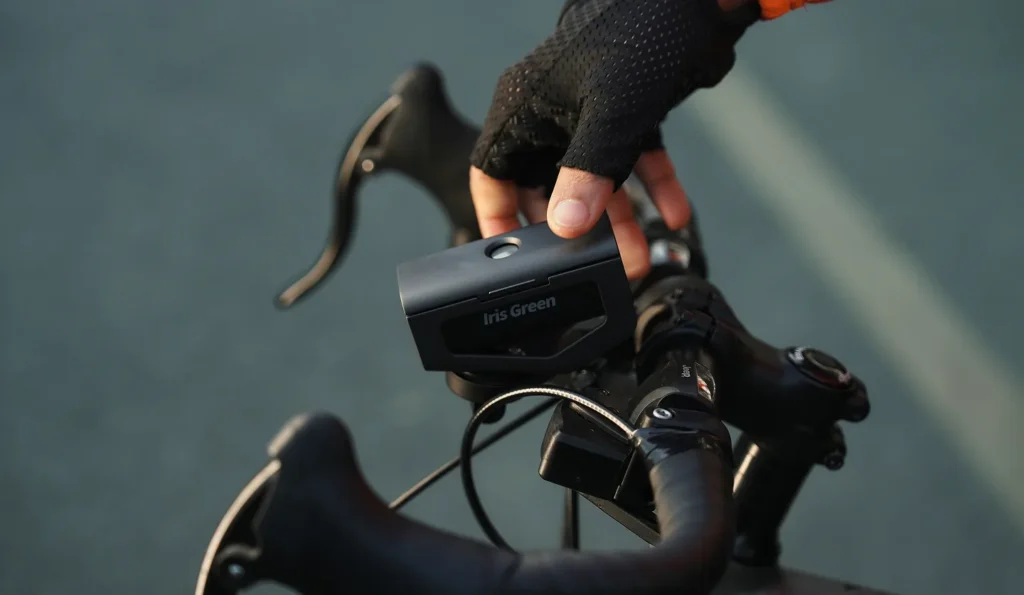
The mounting system affects the rider’s ability to install the product and align the projection correctly. The product experience depends not only on the optical engine, but also on how the device connects to the bicycle.
Battery and device operation
Charging, power control, buttons, indicators, firmware, and communication with the app all need to function as part of the same system. The goal is not merely to manufacture a projection module. It is to manufacture a complete cycling product.
Validating the complete experience
A hardware component can pass its own technical test while the overall customer experience still fails. For that reason, IRIS Green must be considered as a complete journey: open the package, mount the device, charge and power it on, pair the app, select or receive content, confirm the projection, and use it in the intended riding environment.
Can the rider install it correctly?
The mounting process and alignment guidance need to be understandable without requiring direct assistance from an engineer.
Can the device and app connect reliably?
The first-use experience depends on hardware, firmware, phone compatibility, permissions, and clear instructions working together.
Is the projected content appropriate for riding?
A detailed phone interface cannot simply be copied onto the road. Projected content needs simple shapes, clear hierarchy, fast recognition, limited information, and appropriate visual scale.
Does the product work in its intended environment?
IRIS Green is designed primarily for night and low-light riding. Its visible performance can vary with ambient light, road color, road texture, projection distance, weather, and selected content. Real-world validation therefore matters alongside indoor technical testing.
Can customers get help after delivery?
Documentation and support preparation are part of production readiness. Customers may need help with mounting, app pairing, firmware, charging, projection settings, content selection, and troubleshooting. A consumer product is not complete when it leaves the assembly line. It also needs a support path.
Preparing the product for delivery
Manufacturing and shipping are related, but they are not the same milestone. Before an order can be dispatched, the wider delivery system may need to account for product inspection, packaging, accessory verification, order information, shipping addresses, destination grouping, carrier arrangements, export and logistics documentation, tracking generation, and customer notifications.
This is why terms such as production preparation, production completed, fulfillment preparation, and shipping started should not be used interchangeably. They describe different stages. A responsible update should state exactly which stage has been reached, without using broader language that could create an incorrect expectation.
Why this article does not include a fixed shipping timeline
Production and fulfillment information changes as work progresses. Placing a specific shipping promise inside a long-term Blog article would create two problems: the article could become outdated, and an old estimate could be mistaken for the latest confirmed schedule.
For that reason, current production, order preparation, shipping, address, and tracking information should live on the official Crowdfunding Updates page and in direct order emails. Readers should treat those channels as the source of truth for current fulfillment information.
What a useful production update should communicate
Backers do not need every internal meeting or manufacturing detail. They need clear answers to a smaller set of questions:
- What has been completed?
- What is currently in progress?
- What remains before shipping?
- Has the expected sequence changed?
- Is any action required from the customer?
- When will the next confirmed update be published?
An update does not need to exaggerate progress to be useful. It may simply confirm that a stage remains in progress and that no new action is required from backers. Clear status language is more valuable than promotional language.
What success looks like
Kickstarter success and product success are measured differently. The campaign succeeded when riders supported the concept. The product succeeds when a rider can receive the correct device and accessories, install it with clear guidance, connect it to the IRIS App, activate the intended functions, use it under the conditions for which it was designed, and obtain support when something does not work as expected.
The goal is not simply to produce a certain number of boxes. It is to deliver a complete and supportable experience.
The journey beyond the campaign
The transition from Kickstarter to production can be summarized in five stages:
- 1 Validate the ideaConfirm that riders understand the category and see value in the proposed experience.
- 2 Define the productConfirm what the first delivery version includes and control unnecessary changes.
- 3 Make it repeatableEstablish assembly, alignment, software, and inspection processes that do not depend on one hand-prepared prototype.
- 4 Validate the experienceTest the complete flow from installation and pairing to projection and riding use.
- 5 Prepare for deliveryConnect the product with packaging, order data, logistics, tracking, communication, and support.
These stages are related, but they do not always move forward at exactly the same speed. Hardware, software, packaging, and logistics may progress on different timelines. The purpose of project management is to bring them together into one deliverable customer experience.
From backer support to product responsibility
IRIS Green began its Kickstarter journey by asking riders to believe that road projection could become a meaningful part of cycling. Backers gave the project that opportunity.
The work after the campaign is about earning that support through careful decisions, repeatable engineering, transparent communication, and responsible delivery preparation. The campaign is an important part of the IRIS Green story, but it is not the final chapter.
The final measure is whether the original idea becomes a product that riders can install, activate, understand, and experience on the road. Kickstarter proved that riders were willing to support the idea. Production is the process of turning that support into a product.
See road projection in action.
IRIS Green projects navigation, ride data, visible signals, and personal visuals onto the road ahead.
Explore IRISGreen