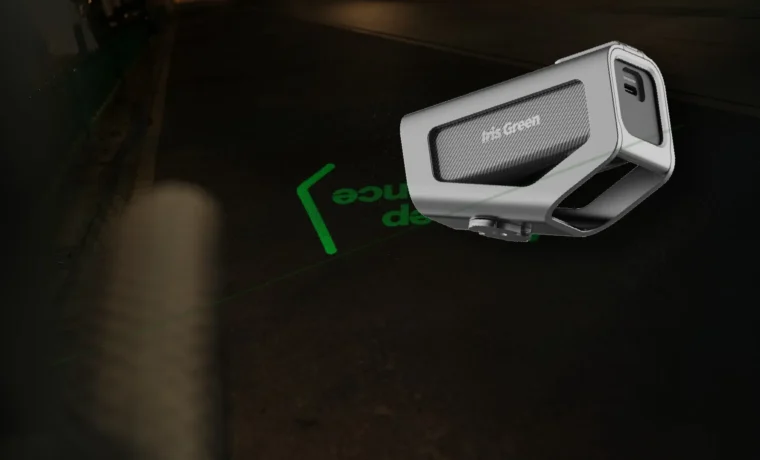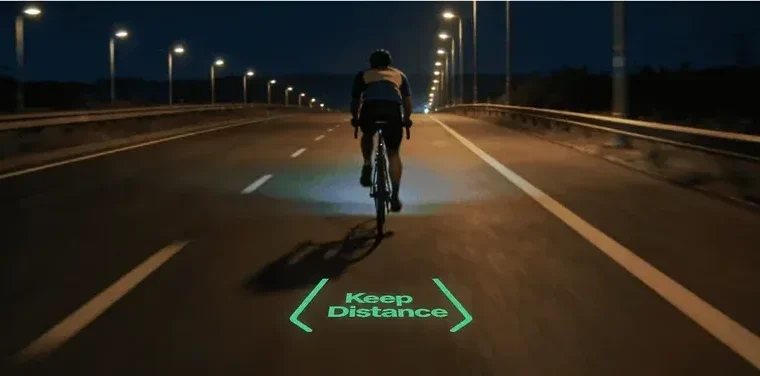
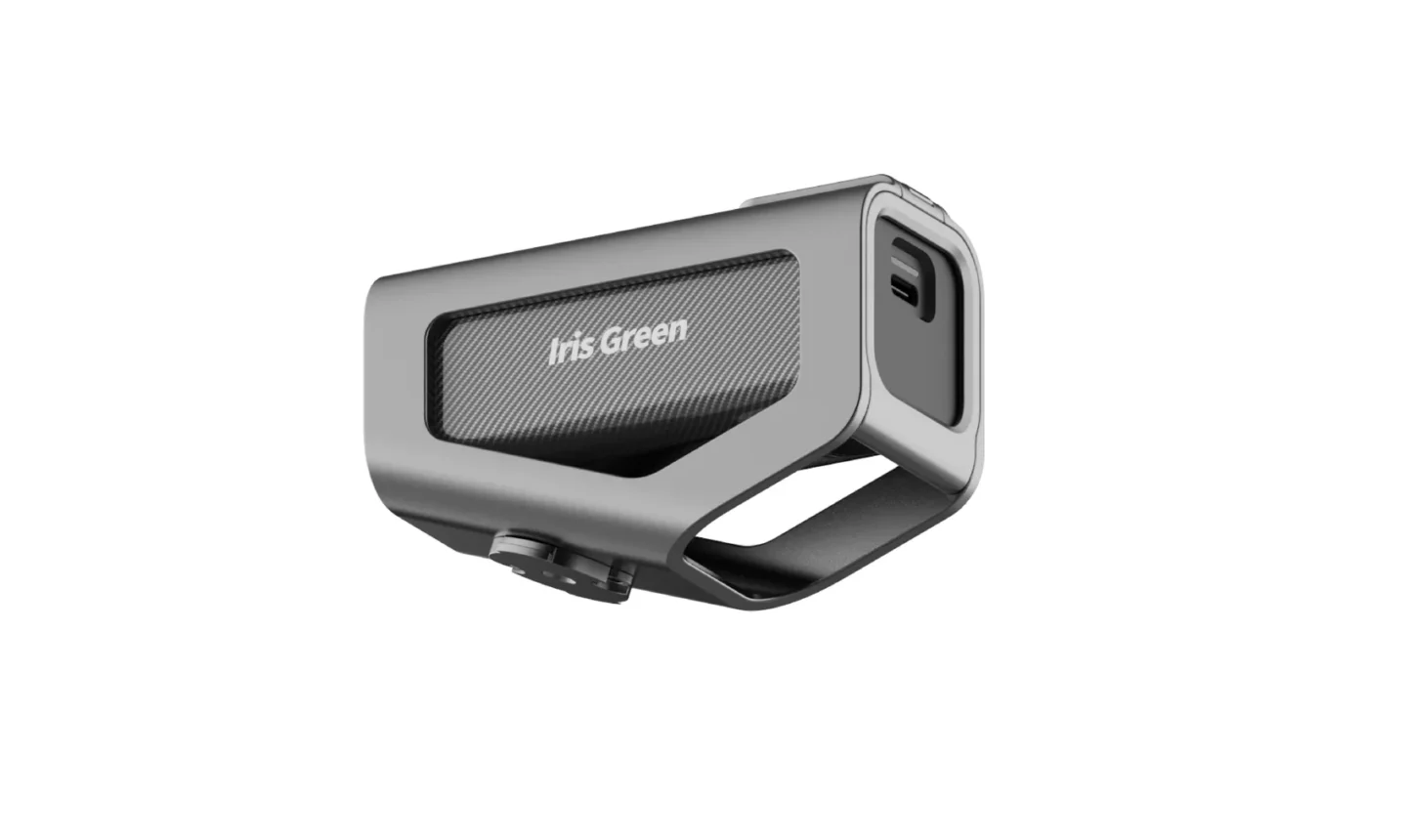
Putting a projection system on a bicycle creates a very different engineering problem from placing a projector on a desk. The device must be compact enough for the handlebar, light enough for daily riding, capable of displaying changing digital content, and usable without stopping to adjust focus.
The engineering problem behind a bike projection display
A projection device intended for cycling cannot simply be a smaller version of a home projector. It has to fit into an already crowded cockpit alongside brake levers, gear controls, bike computers, phone mounts, front lights, cables, and other accessories.
It also has to project toward a road surface that is constantly changing in distance, texture, angle, and lighting. A practical bike projection display therefore needs to solve several problems at once:
- How can the optical system remain compact?
- How can it operate without manual focusing?
- How can the projected content change digitally?
- How can the system be integrated into battery-powered outdoor hardware?
- How can projected information remain simple enough to understand while riding?
IRIS Green uses MEMS laser beam scanning, or MEMS-LBS, as the foundation of its optical system. MEMS-LBS provides the optical foundation for compactness, focus-free operation, and dynamic content. Full-stack product engineering is required to turn that foundation into a usable cycling product.
What is MEMS projection technology?
MEMS stands for Micro-Electro-Mechanical Systems. MEMS devices combine microscopic mechanical structures with electronic control. In optical applications, one of those structures can be a tiny movable mirror capable of redirecting light in one or two dimensions.
The mirror is not simply a miniature household mirror. It is a precisely engineered moving structure that can change angle at high speed. When the mirror movement is coordinated with a laser source and control electronics, the system can direct light to different positions on a projection surface.
That controlled movement is the basis of laser beam scanning projection.
How laser beam scanning forms an image
1. A laser produces a narrow beam
The system begins with a controllable laser light source. Unlike a lamp illuminating an entire image panel, the laser produces a narrow beam that can be directed toward individual positions on the projection surface.
2. A MEMS micromirror scans the beam
The laser beam reaches a MEMS scanning mirror. As the mirror changes angle, it redirects the beam horizontally and vertically across the projection area. This motion gives the system a compact way to control where light appears.
3. Light output and mirror motion are synchronized
The mirror creates the scanning path, but the image is formed by controlling the laser as the beam moves. The system coordinates mirror position, scan timing, laser output, image data, and control electronics.
The key idea: the mirror determines where the light goes. The control system determines what image appears.
This process happens quickly enough that the rider sees a complete arrow, symbol, number, or graphic rather than a moving point of light.
What MEMS enables in IRIS Green
The importance of MEMS is not the size of the chip itself. Its value comes from the product capabilities that the scanning architecture enables.
Compact
An image-forming architecture small enough to support bike-mounted product design.
Focus-free
No conventional focus ring needs to be adjusted during normal riding use.
Dynamic
Digitally controlled content can change according to riding mode, app settings, or selected visuals.
Compact: an optical system that fits the bike
Traditional panel-based projectors require an image-forming panel, illumination path, projection lens, and physical space for the optical components. A MEMS laser scanning system forms the image by steering a beam rather than projecting a complete panel image through the same type of optical architecture.
For IRIS Green, this supports a compact image-forming architecture suitable for cockpit mounting. The complete product still needs much more than a mirror: laser source, optics, electronics, processor, battery, housing, mount, and charging system. MEMS does not make every part disappear. It makes the core scanning system small enough for the entire product to be designed around cycling.
Why compactness matters to the rider
A smaller optical system makes it easier to fit the device into the handlebar area, avoid blocking normal cycling controls, carry the device between rides, combine projection with a phone or bike computer, and build projection into a dedicated cycling product.
The rider does not need to understand the dimensions of the MEMS mirror to experience the result. The result is a projection system that can leave the laboratory and become part of the bike.
Focus-free: no conventional manual adjustment
A conventional projector usually forms an image at a particular focal distance. Move the projector or screen too far, and the user may need to adjust the lens. That is acceptable for a stationary projector. It is not practical for a bicycle travelling over uneven roads while the projection distance changes.
IRIS Green is specified around focus-free operation, meaning the rider does not need to operate a conventional focus ring during normal use.
What focus-free does and does not mean
Focus-free operation does not mean that every road will produce an identical image. The visible result can still be affected by road texture, road color, ambient light, projection distance, projection angle, weather, and surface irregularities.
The benefit is not perfect consistency under every condition. The benefit is removing a manual adjustment that would be unsuitable for a moving bicycle.
Dynamic: content that can change with the ride
IRIS Green is not intended to project one permanent image. Its value depends on displaying different content according to the riding situation, connected data, app settings, or user selection.
Because the beam movement and laser output are digitally controlled, the image can change without replacing a physical slide, stencil, or mask. This allows a bike projection display to present content such as directional cues, speed or ride information, status indicators, warning graphics, symbols, labels, and personalized visual content.
A traditional bike light mainly provides illumination or visibility. A dynamic projection system can carry information. This is what allows IRIS Green to function as a riding interface rather than only another source of green light.
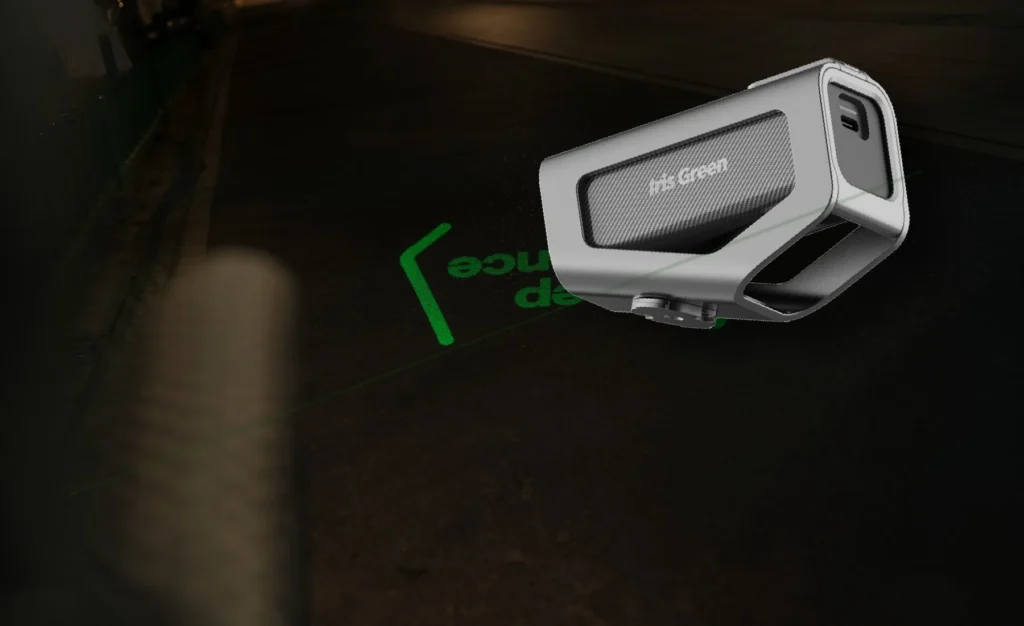
A MEMS mirror is not a finished product
It would be inaccurate to say that a MEMS micromirror alone creates IRIS Green. The micromirror provides controlled beam movement. A complete projection system still requires several engineering layers.
Optical engineering
The optical system manages how light travels from the source to the scanning mirror and toward the road. It influences projection angle, image size, optical efficiency, alignment, output consistency, and physical packaging.
Electronics and embedded control
The laser and mirror must operate in precise synchronization. The electronics manage scan timing, laser modulation, image frames, power states, device commands, battery operation, and system protection.
Algorithms and content processing
Projected content must be generated for a road surface viewed at an angle. The system also needs to convert app content, data, or navigation information into graphics designed for rapid recognition. Shape, line weight, contrast, information hierarchy, image geometry, and display timing all matter.
Mechanical and outdoor engineering
A laboratory projection system can sit on a stable bench. A cycling product must account for vibration, road shock, rain, dust, temperature changes, mounting alignment, limited battery capacity, and repeated installation and removal. These capabilities do not come automatically from MEMS. They come from engineering the component into a complete product.
From MEMS platform to IRIS Green
Ainstec’s role extends across the optical stack rather than beginning with a completed off-the-shelf projector. Its technology platform covers MEMS micromirrors, optical engines, electronics, algorithms, embedded control, and system integration. IRIS is the consumer brand that turns those capabilities into visible riding experiences.
- MEMS micromirror Provides high-speed, controlled light scanning.
- Optical engine Combines the mirror, laser source, optics, and drivers into a functioning projection module.
- System control Coordinates image data, mirror movement, laser modulation, power, and device behavior.
- Product integration Adds enclosure, battery, charging, mount, outdoor protection, and riding-oriented design.
- Software experience Allows users to configure the device and manage supported projected content.
This is the difference between using a MEMS component and building a complete MEMS projection product.
Why IRIS Green is not simply a mini projector on a bike
A conventional mini projector is generally designed to reproduce complete media on a wall or screen. IRIS Green is designed around a different set of priorities: compact mounting, road-facing projection, low-light riding, selected ride information, app-controlled content, and outdoor product integration.
This does not mean MEMS-LBS is superior for every projection application. Panel-based projectors may be better suited to high-brightness indoor viewing, full-color media, or large-format presentation. MEMS-LBS is valuable here because its architecture is better aligned with the specific requirements of a compact, dynamic, bike-mounted projection system.
What MEMS does not solve by itself
MEMS technology does not automatically guarantee daylight visibility, long battery life, weather resistance, stable mounting, useful interface design, accurate navigation, product reliability, or legal use in every region. These are separate product and engineering challenges.
IRIS Green is designed primarily for night and low-light riding. Its visible performance depends on ambient light, road conditions, projection distance, and selected content. It should not replace legally required bicycle lights, reflectors, signaling, or rider attention.
Credible technology story: MEMS is not magic. It is an enabling architecture. Full-stack engineering makes IRIS Green possible as a usable cycling product.
Frequently asked questions
What is MEMS projection technology?
MEMS projection technology uses microscopic electromechanical structures to control light. In a laser beam scanning system, a movable MEMS micromirror directs a laser beam across a surface to form an image.
How does a MEMS scanning mirror create an image?
The mirror scans the laser beam horizontally and vertically. The laser output is modulated in synchronization with the mirror position, causing illuminated points and lines to combine into a visible image.
Why is IRIS Green focus-free?
Its laser beam scanning architecture does not require the same conventional manual focusing mechanism used by many panel-based projectors. The rider does not need to adjust a focus ring during normal operation.
Is the MEMS mirror the complete projection system?
No. The complete system also includes the laser source, optics, drivers, electronics, embedded software, algorithms, battery, enclosure, mounting system, app, and product validation.
Does MEMS projection work in daylight?
MEMS describes how the beam is scanned, not how visible the image will be under every lighting condition. IRIS Green is designed primarily for night and low-light use, and strong ambient light reduces projection contrast.
Conclusion
MEMS projection technology makes IRIS Green possible because it enables a compact, focus-free, and digitally controlled image-forming architecture. The MEMS micromirror provides precise, high-speed movement of the laser beam, helping IRIS Green fit into a bike-mounted product, operate without conventional manual focusing, and display changing digital content.
But the mirror is only the starting point. IRIS Green becomes a usable cycling product through the integration of optics, electronics, embedded control, algorithms, mechanical design, power management, app software, and real-world product validation.
The clearest way to understand the technology is simple: MEMS makes the optical architecture possible. Full-stack engineering makes IRIS Green possible.
See road projection in action.
IRIS Green projects navigation, ride data, visible signals, and personal visuals onto the road ahead.
Explore IRISGreen