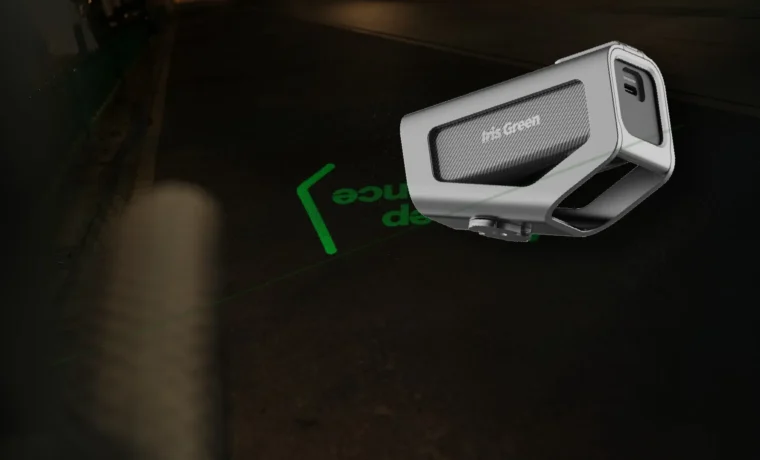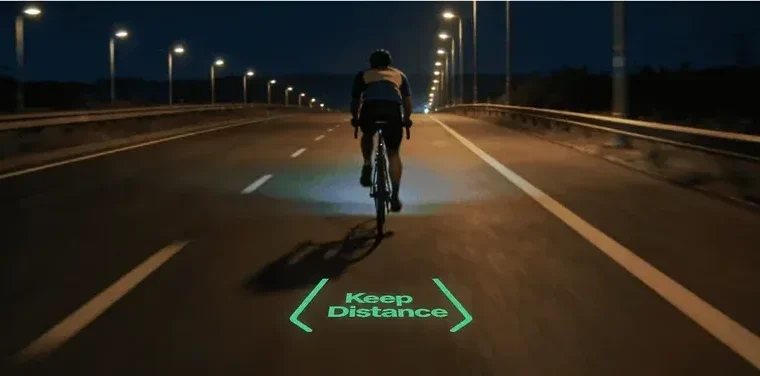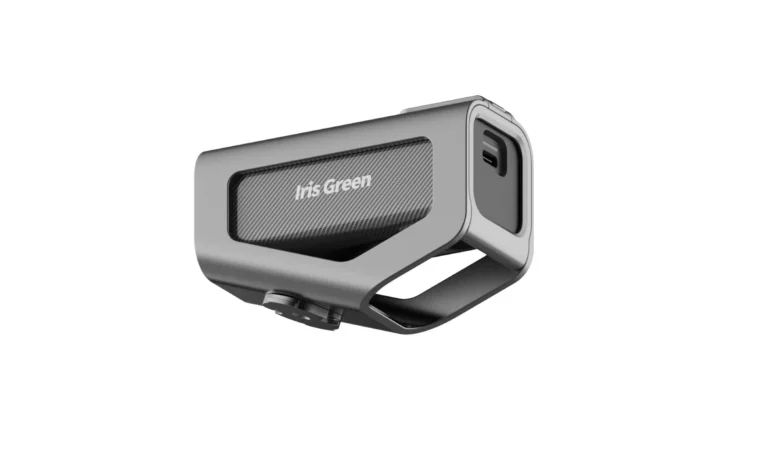
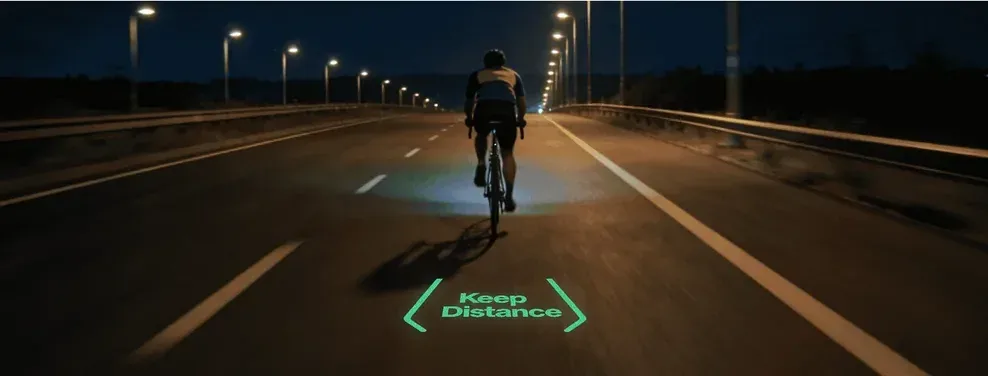
Depending on the system, projected content may include directional cues, warning symbols, speed, distance, turn indicators, or customized graphics. Unlike a conventional bike computer, the information does not remain on a handlebar screen. Unlike a wearable bike HUD, the display is not positioned near the rider’s eye. Cycling road projection places selected information directly into the forward riding environment.
What is a bike projection display?
A bike projection display is a cycling interface that connects digital ride information with the physical road. The goal is not to project every metric a rider can measure. The goal is to place a smaller set of priority cues where they can be understood quickly during a ride.
Simple definition: a bike projection display helps selected cycling information appear on the road ahead instead of only on a phone, bike computer, or wearable screen.
How does a bike projection display work?
A typical bike projection display combines four main components:
- A compact projection engine
- Control electronics and embedded software
- A bicycle mounting system
- An app or connected device for managing content
The projection engine creates the image, while electronics and software determine what appears, how it is positioned, and when it changes. The device is usually mounted near the handlebar, with projection directed toward the road several feet or meters ahead of the bicycle.
Some systems use MEMS-based laser scanning technology. A microscopic mirror rapidly redirects a laser beam across the projection area, creating a visible image one line at a time. This type of optical system can be made smaller than many conventional projection systems, making it suitable for compact mobility devices.
What can cycling road projection display?
Navigation cues
A cycling projection display can show simplified directional arrows for upcoming turns, such as turn left, turn right, continue forward, or prepare for an upcoming direction change. This can reduce how frequently a rider needs to check a phone or bike computer for basic route guidance. It does not remove the need to observe the road or check a full route when necessary.
Ride information
A bike projection display may present selected ride data, including speed, distance, riding time, heart rate, battery status, or connected sensor information. A useful cycling interface should prioritize only the information that matters during the ride. More complex maps, settings, and performance analysis can remain inside the app or bike computer.
Warning and communication symbols
Projected symbols may help make a rider’s movement or intentions more visible to nearby road users. Possible examples include turn-related symbols, warning graphics, braking-related indicators, visibility patterns, or group-riding signals. Cycling road projection should be treated as an additional communication layer, not as a replacement for legally required bicycle lights, reflectors, hand signals, or responsible riding behavior.
Customized graphics
Some systems allow riders to display selected icons, graphics, or visual patterns. For night riders, urban cyclists, and content creators, the projected image can become part of the bicycle’s visual identity.
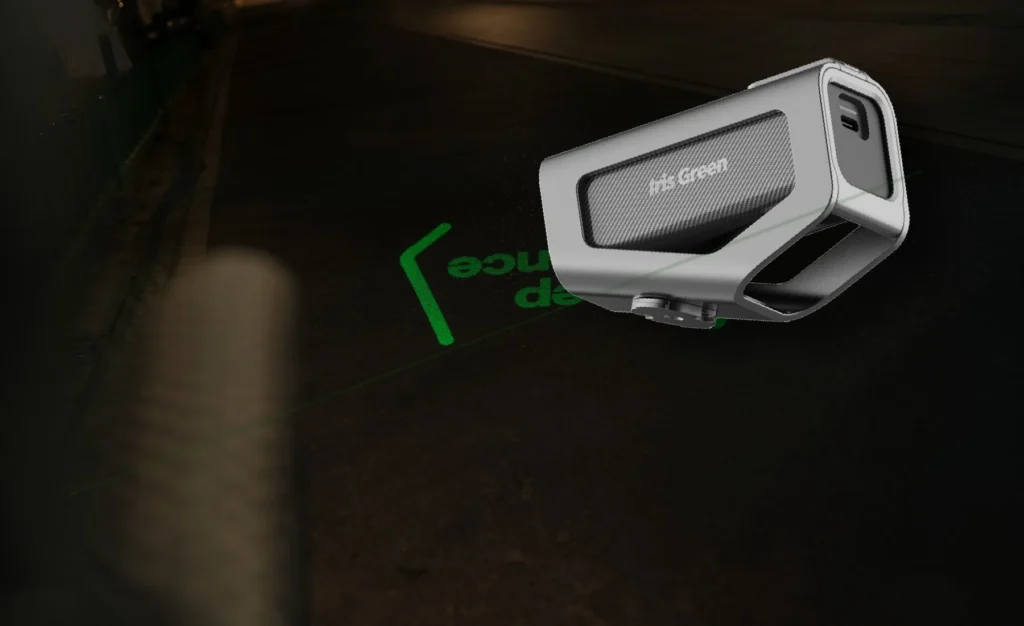
Is a bike projection display the same as a bike HUD?
A bike projection display can be considered one form of bike HUD, but the terms are not exactly the same. A heads-up display generally places important information closer to the user’s forward field of view. A wearable bike HUD keeps the information private and close to the eye. A road projection display places the visual output outside the device, where it may also be visible to nearby riders, drivers, or pedestrians.
Wearable bike HUD
Information appears near the rider’s eye and is mainly private to the rider.
Bike projection display
Information appears on the road ahead and can combine personal cues, external communication, and visual expression.
Bike projection display vs. bike computer
A bike projection display is not necessarily intended to replace a bike computer. Bike computers remain better suited to full route maps, detailed performance metrics, training data, power measurement, ride history, and complex device controls.
A projection display can serve a different purpose by presenting a smaller number of priority cues in a more immediate visual format. For example, a rider may use a bike computer to manage the complete route while displaying only the next turn or current speed on the road. The difference is not simply how much information each device can provide. The main difference is where and how the information appears.
When does cycling road projection work best?
A bike projection display is generally designed for night riding and low-light environments. Projection visibility can vary depending on ambient light, road color, road texture, projection brightness, projection angle, weather, riding speed, and distance between the device and the road.
Dark, relatively even road surfaces usually provide clearer results than bright, reflective, or irregular surfaces. Street lighting may reduce contrast compared with a completely dark road, but a suitable projection system should still be designed around common urban night-riding conditions. Strong daylight creates a much more difficult environment for road projection.
Safety and legal limits
A bike projection display should support riding awareness rather than create another source of distraction. Good interface design should prioritize simple graphics, limited information, clear visual hierarchy, stable projection, appropriate brightness, and minimal interaction while riding. Routes, graphics, and display preferences should be configured before the ride whenever possible.
Cycling road projection is an additional riding interface. It is not a replacement for attention, judgment, required front lights, rear lights, reflectors, or safe cycling practices. Rules may also vary between countries, states, and cities. Some regions may restrict projected images on public roads, specific light colors, flashing patterns, navigation symbols, graphics that resemble traffic signs, or content that may distract other road users.
What should riders check before choosing one?
- Real riding visibility: look for footage under streetlights, on darker roads, and across different surfaces.
- Mounting compatibility: check handlebar diameter, available mounting space, projection angle, and removable setup.
- Battery life: confirm it fits your normal commuting or night-riding duration.
- Weather resistance: look for a clearly stated water- and dust-resistance rating.
- App support: check smartphone compatibility, language support, software updates, and sensor support.
- Warranty and support: replacement mounts, technical guidance, repair options, and warranty coverage matter more in a new product category.
How IRIS Green approaches road projection
IRIS Green is a bicycle-mounted projection device developed specifically around the night-riding environment. It combines three types of projected experience: ride information, visible road communication, and rider-controlled visual content.
Rather than adapting a conventional projector for bicycle use, IRIS Green integrates the optical system, bike mounting, app-controlled content, and riding workflows into one product. Instead of placing another screen directly in front of the rider’s eye, IRIS Green creates a visible interface on the road ahead.
Frequently asked questions
What is a bike projection display?
A bike projection display is a bicycle-mounted device that projects information or graphics onto the road ahead. It may display navigation cues, ride data, warning symbols, or customized visual content.
Is a bike projection display a bike HUD?
It can be considered a type of bike HUD because it presents information in the rider’s forward environment. Unlike a wearable HUD, however, the image appears on the road rather than near the rider’s eye.
Can cycling road projection replace a bike computer?
Not completely. Bike computers are better suited to detailed maps, training data, and device controls. A projection display is more suitable for presenting a small amount of priority information.
Does road projection work during the day?
Road projection is generally clearer at night and in low-light conditions. Daytime visibility depends heavily on ambient light, road surface, and projection brightness.
Does a bike projection display replace a bicycle light?
No. It should not replace required front lights, rear lights, reflectors, or other legally required safety equipment.
Conclusion
A bike projection display is a new type of cycling interface that projects selected visual information onto the road ahead. Its value does not come from displaying as much information as possible. It comes from showing the right information, in the right format, under the right riding conditions.
See road projection in action.
IRIS Green projects navigation, ride data, visible signals, and personal visuals onto the road ahead.
Explore IRISGreen